
LockTech Security
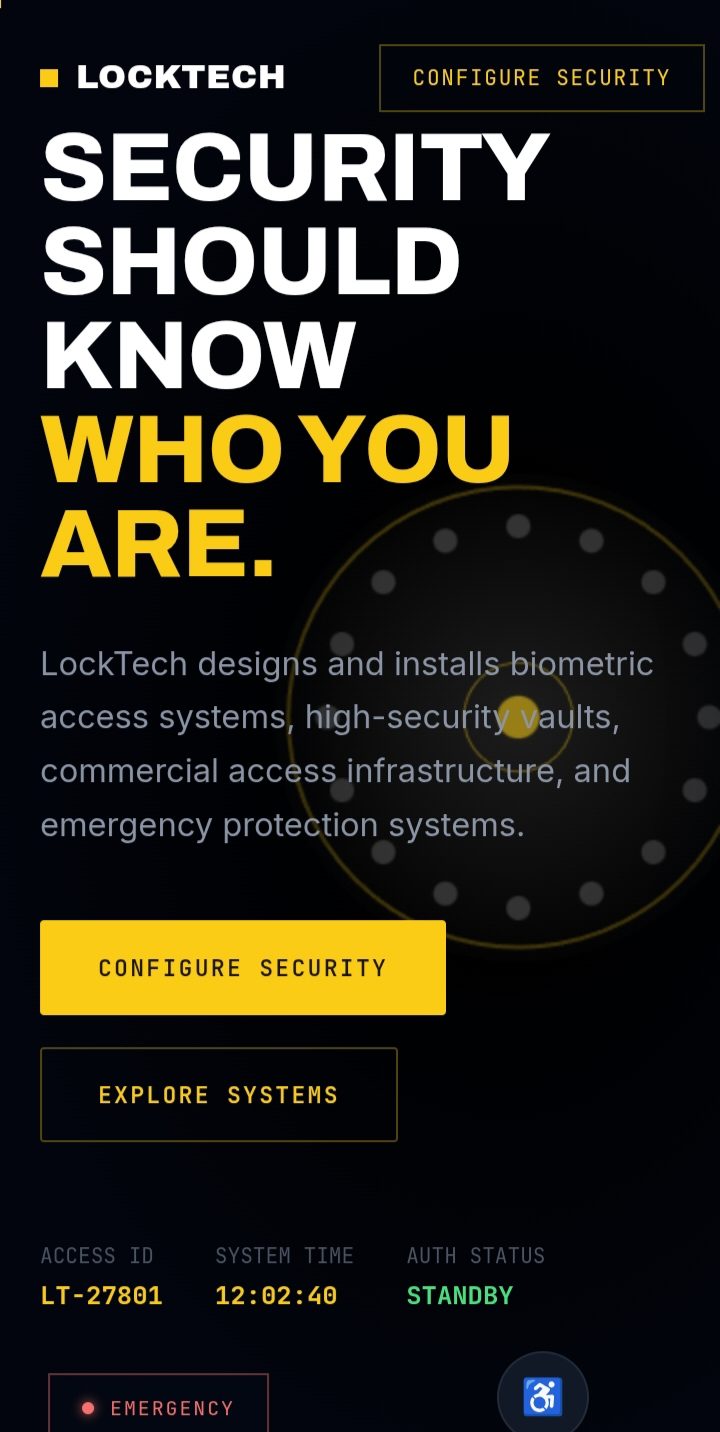
An interactive enterprise security platform concept focused on layered access control, biometric visualization, facility security architecture and operational dashboards.
Context
LockTech Security is a personal concept project imagining the digital control panel for a high-end physical security provider — the kind of company that installs biometric locks, vault systems and emergency response infrastructure for banks, data centers and corporate campuses. The site itself is explicit that its data is simulated, so the focus was entirely on how a serious security brand communicates trust and technical depth through interface design.
The Challenge
Security software tends to look either sterile and corporate or needlessly complex. The challenge was building something that felt genuinely high-stakes — dark, precise, alarm-aware — without overwhelming a first-time visitor who just wants to understand what LockTech actually does.
Objective
Communicate technical depth and operational seriousness within the first screen, without requiring a security background to understand what the platform actually controls.
Approach
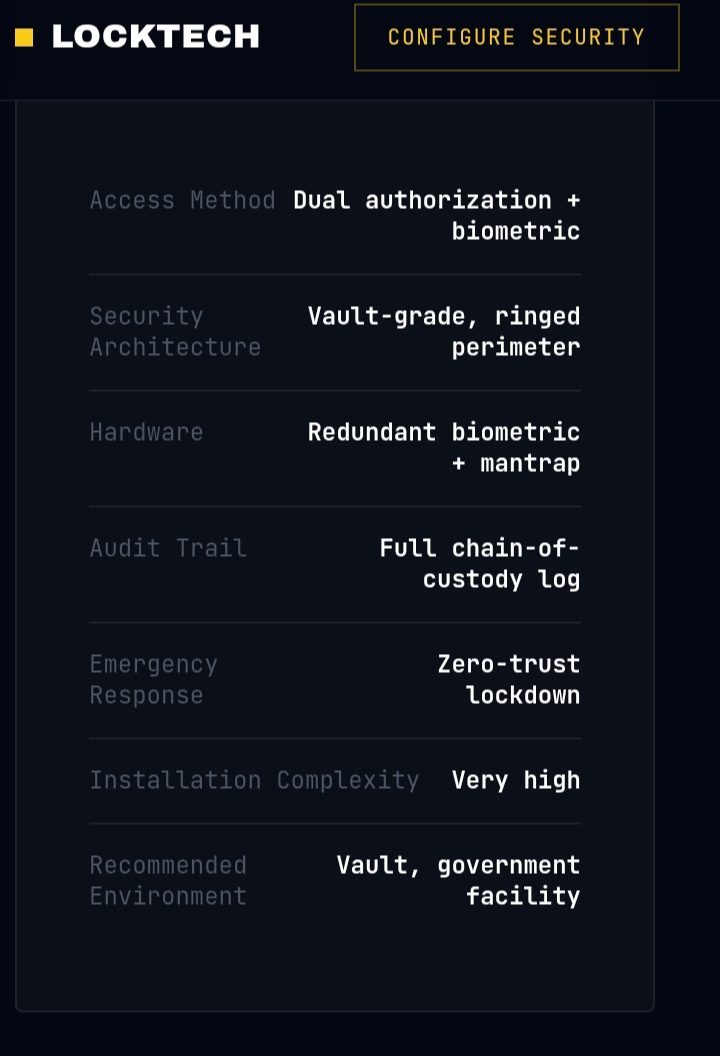
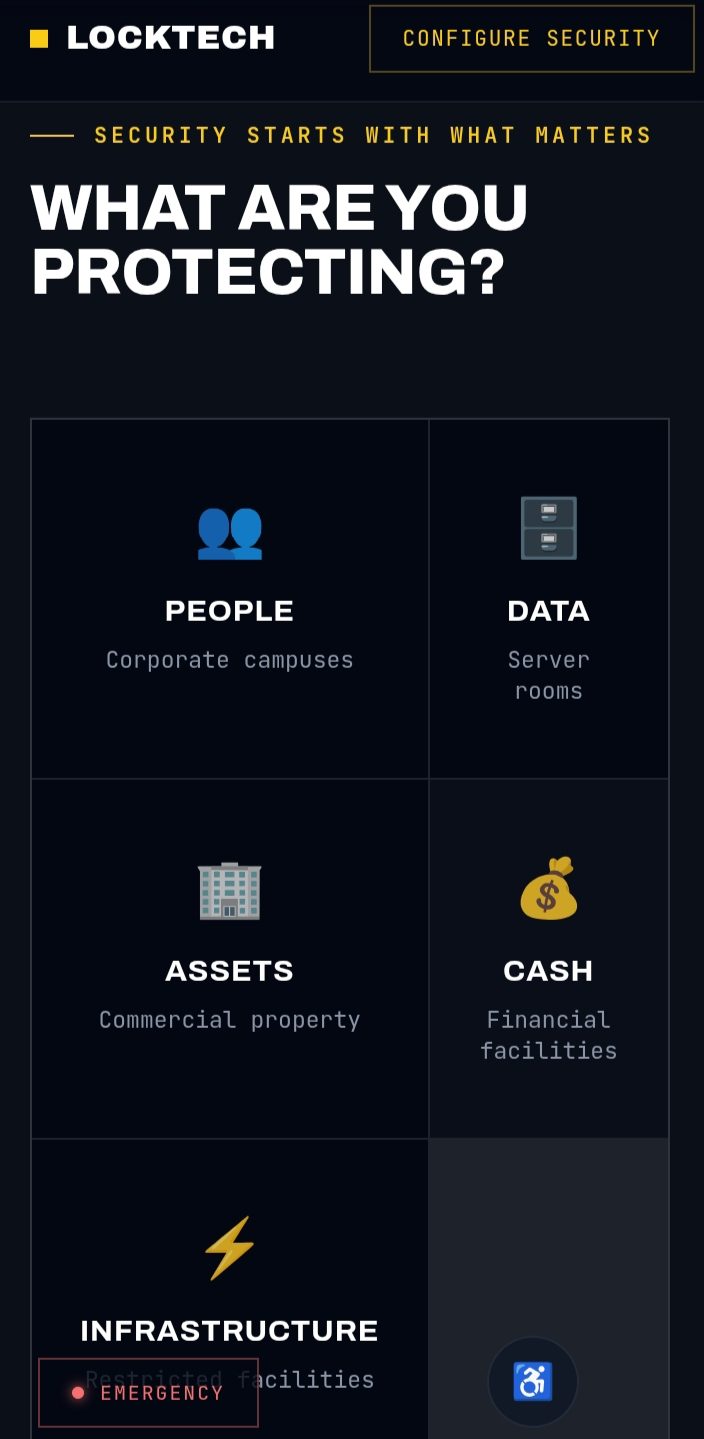
I structured the experience around a question visitors naturally ask first: "what are you protecting?" From there, the interface branches into configurable systems — access methods, vault architecture, emergency response — letting someone explore only the layer they care about instead of reading a wall of specs.
Design Direction
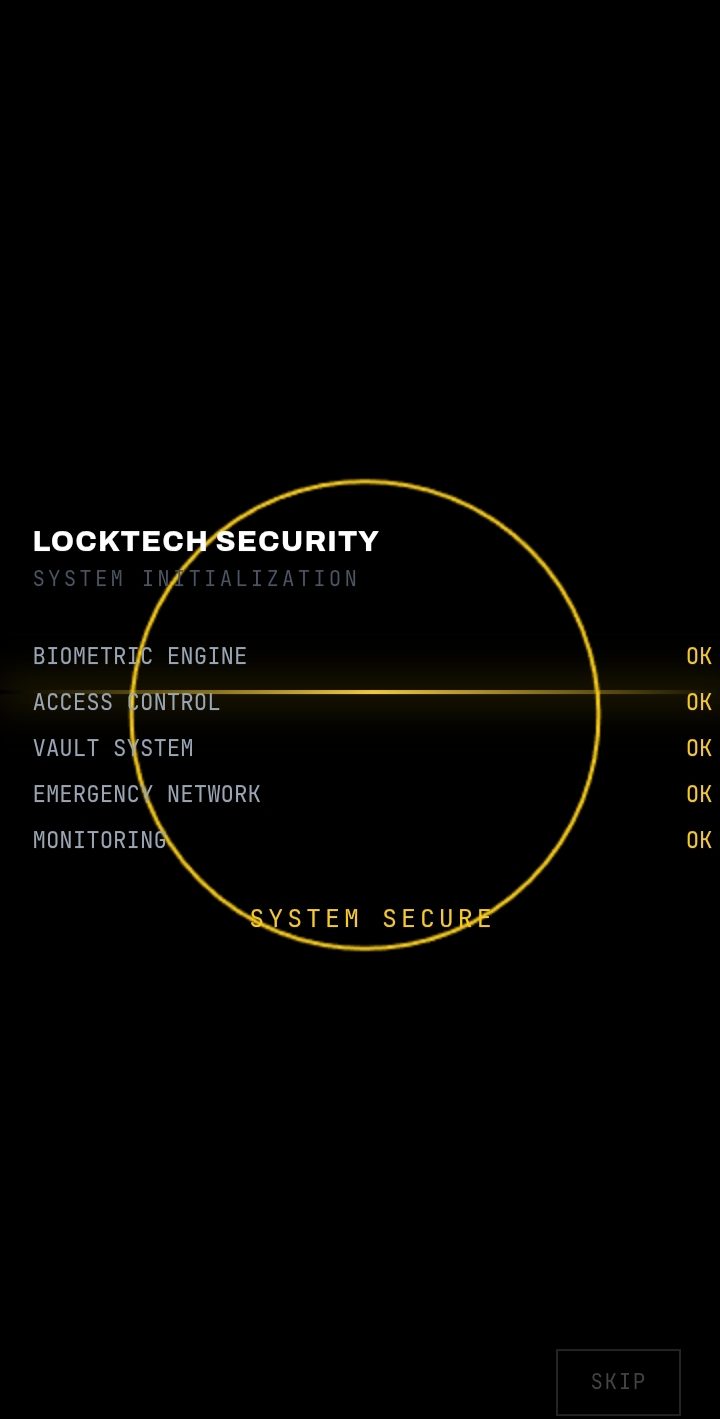
A near-black interface with a single amber accent, monospaced status readouts and a circular biometric motif used throughout. Status indicators ("OK", "SECURE", "STANDBY") reinforce the feeling of a live operational system, even though the values are illustrative.
Technical Implementation
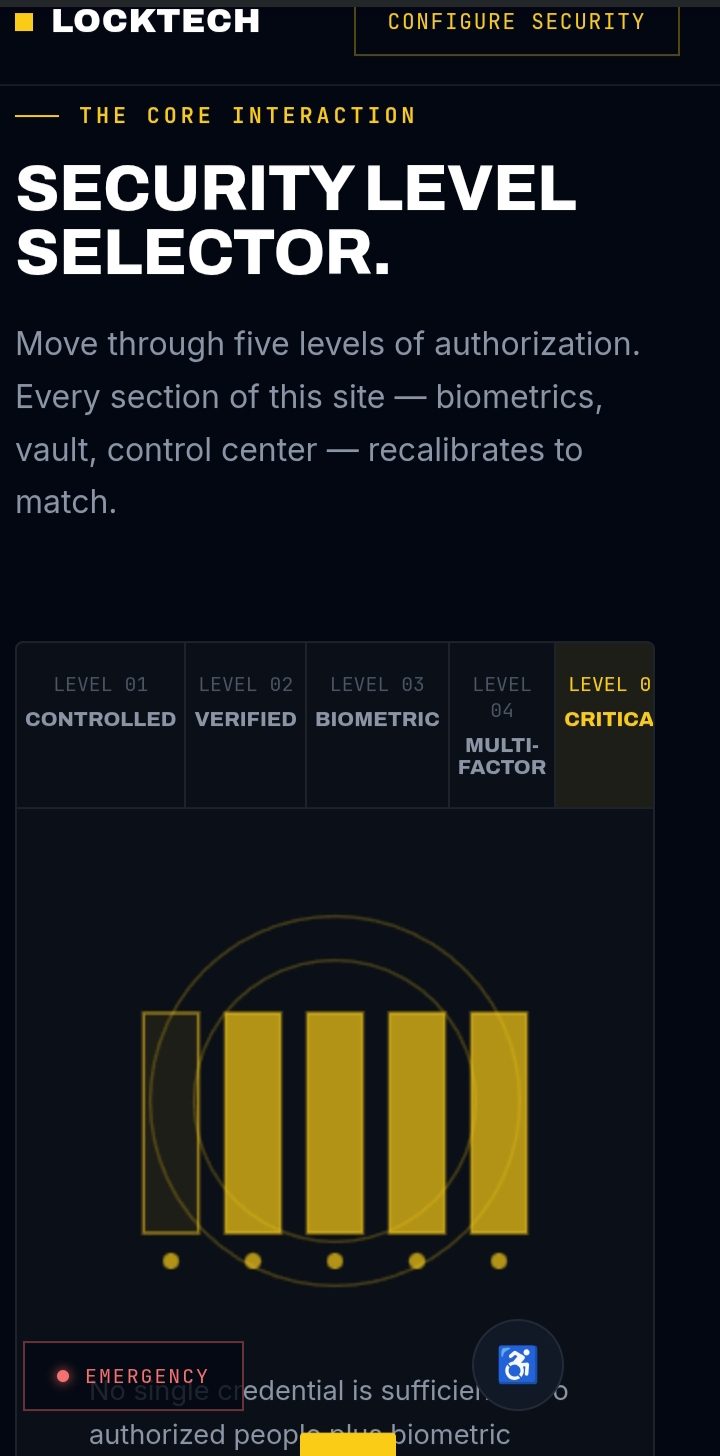
Built with semantic HTML5, modular CSS and vanilla JavaScript. Interactive elements — the security-level selector, vault configurator and emergency simulation — are driven by client-side state changes rather than a backend, since this is a front-end concept demo.
Outcome
A polished interactive frontend concept demonstrating how enterprise security operations can be communicated through dashboards, simulations and layered access visualizations — built entirely with vanilla front-end tools and clearly labeled as a demo experience rather than a real security system.
Lesson
Trust in security software is built through restraint — the fewer alarms an interface raises without cause, the more attention it commands when one matters.