
EventCraft Logistics
An interactive event-planning experience concept that combines venue architecture, guest logistics, staging, VIP movement and security planning into one immersive interface.
Context
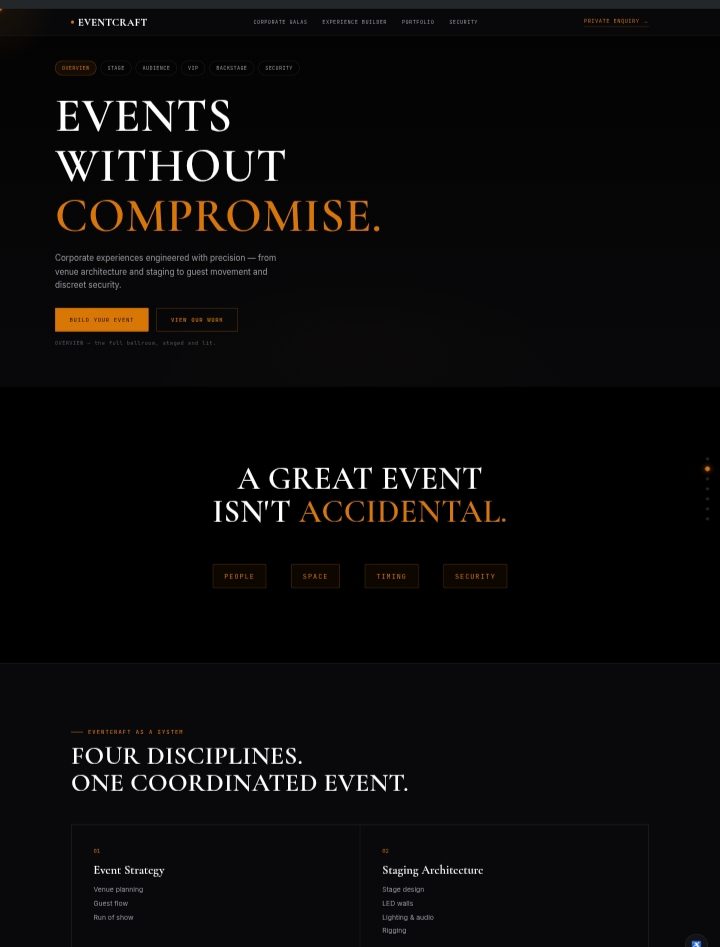
EventCraft Logistics is a concept site for a corporate-event production company — the kind of team that plans galas, brand launches and large-scale corporate gatherings. Rather than a typical portfolio-of-photos event site, this concept treats event planning as a system with four coordinated disciplines: strategy, staging, guest experience and security.
The Challenge
Event planning sites usually show finished photos without explaining the planning work underneath. The challenge was making the invisible parts of event production — floor plans, guest flow, security perimeters — visible and genuinely interactive, not just described in a paragraph.
Objective
Make multi-day, multi-vendor event coordination legible on one screen, so a producer could see status across every moving part without opening five separate tools.
Approach
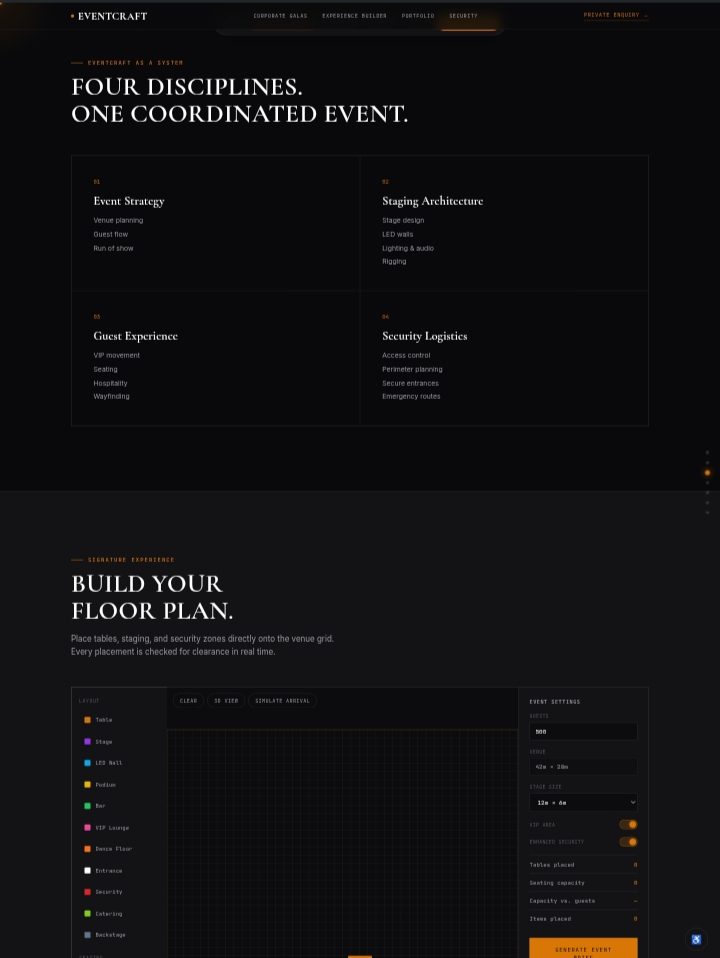
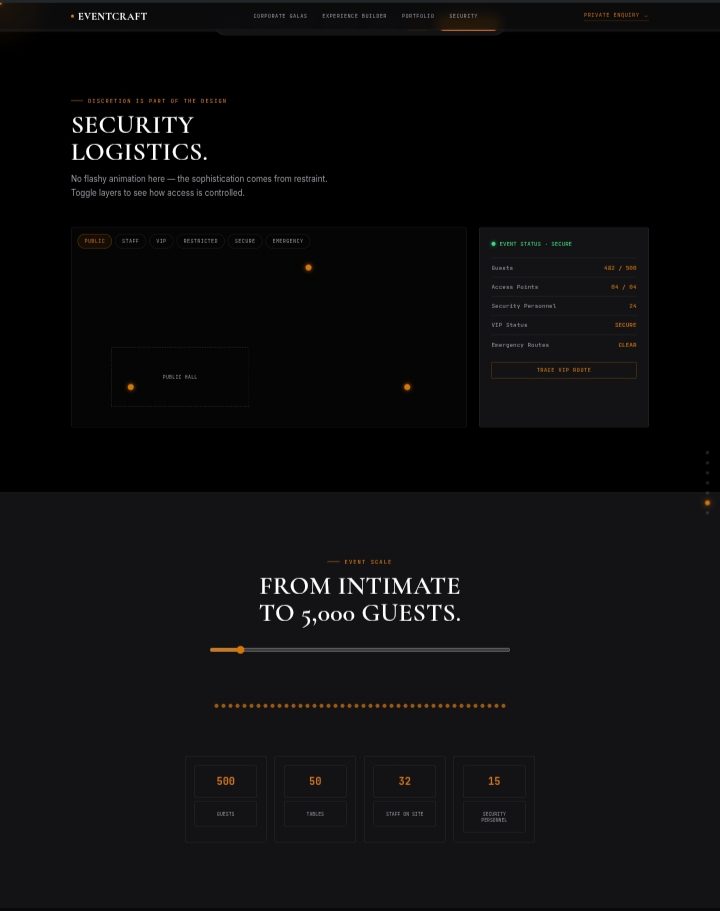
I broke the "system" down into four disciplines shown side-by-side (Event Strategy, Staging Architecture, Guest Experience, Security Logistics), then built a signature interactive centerpiece — a floor-plan builder — so a visitor can actually place tables, staging and security zones on a venue grid rather than just reading about the service.
Design Direction
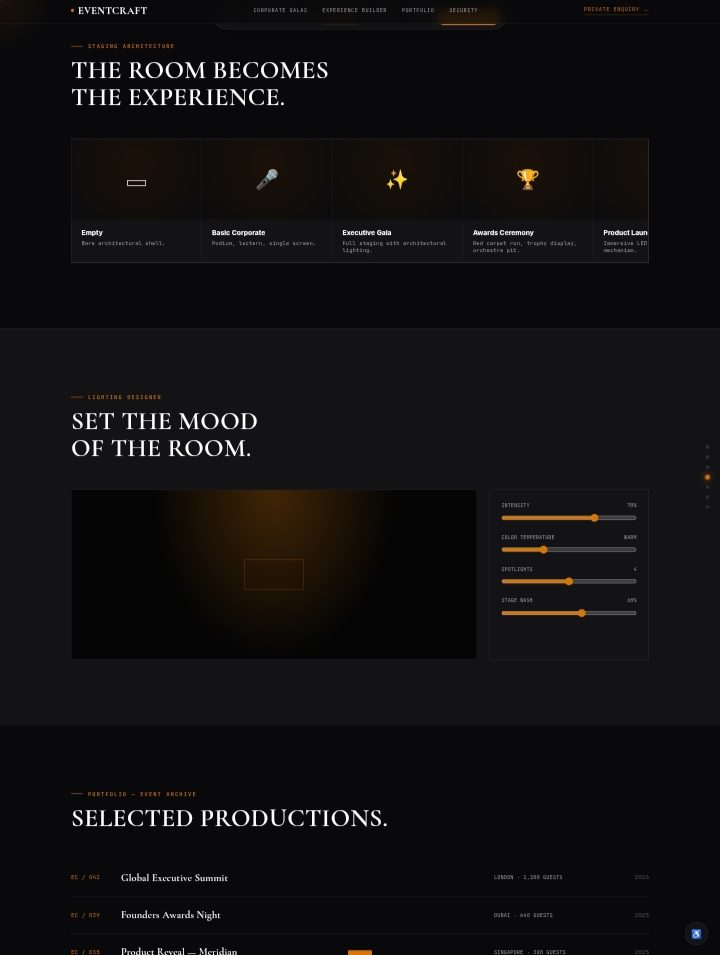
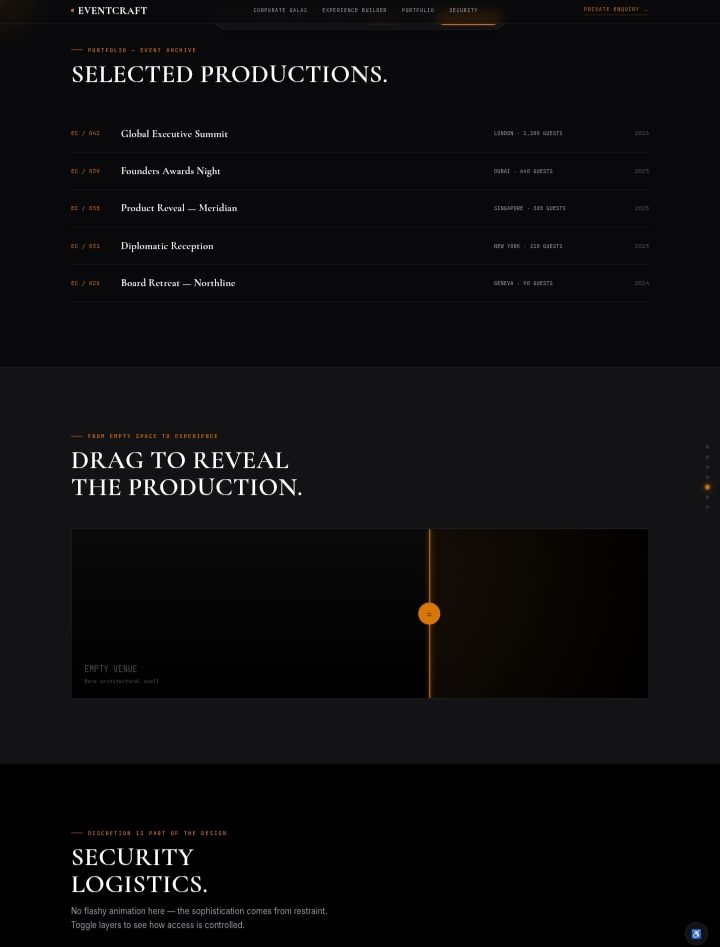
A near-black, editorial layout with warm amber accents and serif display type, giving it a premium, gala-adjacent feel rather than a generic SaaS look. Section dividers use bold pull-quotes ("A great event isn't accidental") to keep long content scannable.
Technical Implementation
Built with semantic HTML5, modular CSS and vanilla JavaScript. The floor-plan builder tracks placed items, seating capacity and guest-to-capacity ratio entirely client-side, updating the layout grid in real time as items are placed.
Outcome
A polished, interactive event-planning concept that demonstrates how staging, guest logistics and security can be visualized together in a single tool — turning an otherwise text-heavy service explanation into something a visitor can actually try.
Lesson
Operational software succeeds when it disappears into the task; the measure of good logistics UI is how little the operator has to think about the interface itself.