
Solis Roof Tile
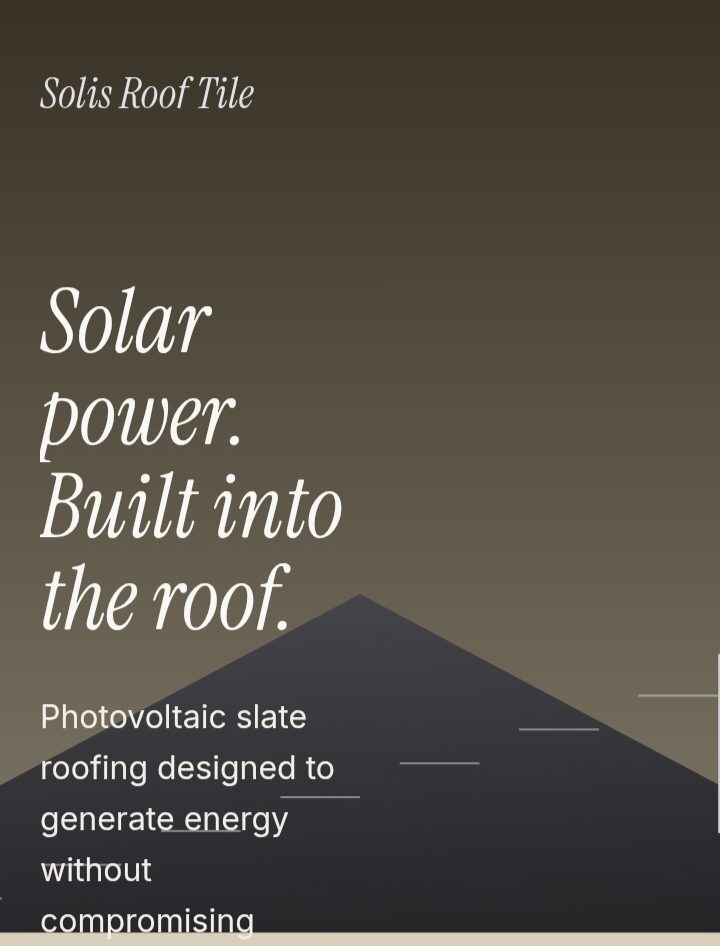
A photovoltaic slate-roofing concept designed to generate energy without compromising architectural character — solar power built into the roof itself, not bolted on top of it.
Context
Solis Roof Tile is a concept for architectural photovoltaic roofing — solar technology integrated directly into slate roof tiles rather than panels mounted on top of a roof. The pitch is squarely aesthetic as well as technical: no visible mounting hardware, no panel array breaking up the roofline.
The Challenge
Solar products usually sell on numbers (output, payback period). An architectural product like this needs to sell on both performance *and* how a building actually looks — a harder story to tell with sliders and copy alone.
Objective
Present a construction material with the same rigor as its datasheet, so specifiers and architects could evaluate it without contacting sales first.
Approach
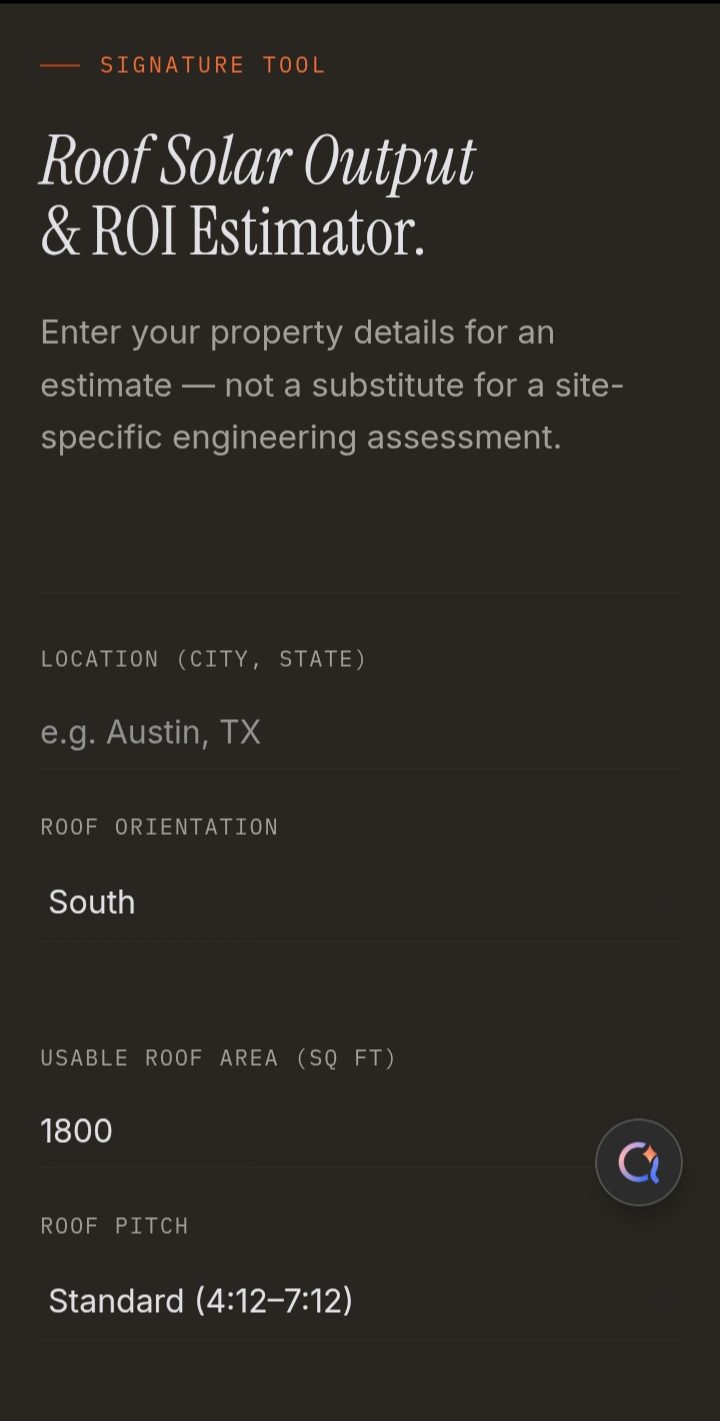
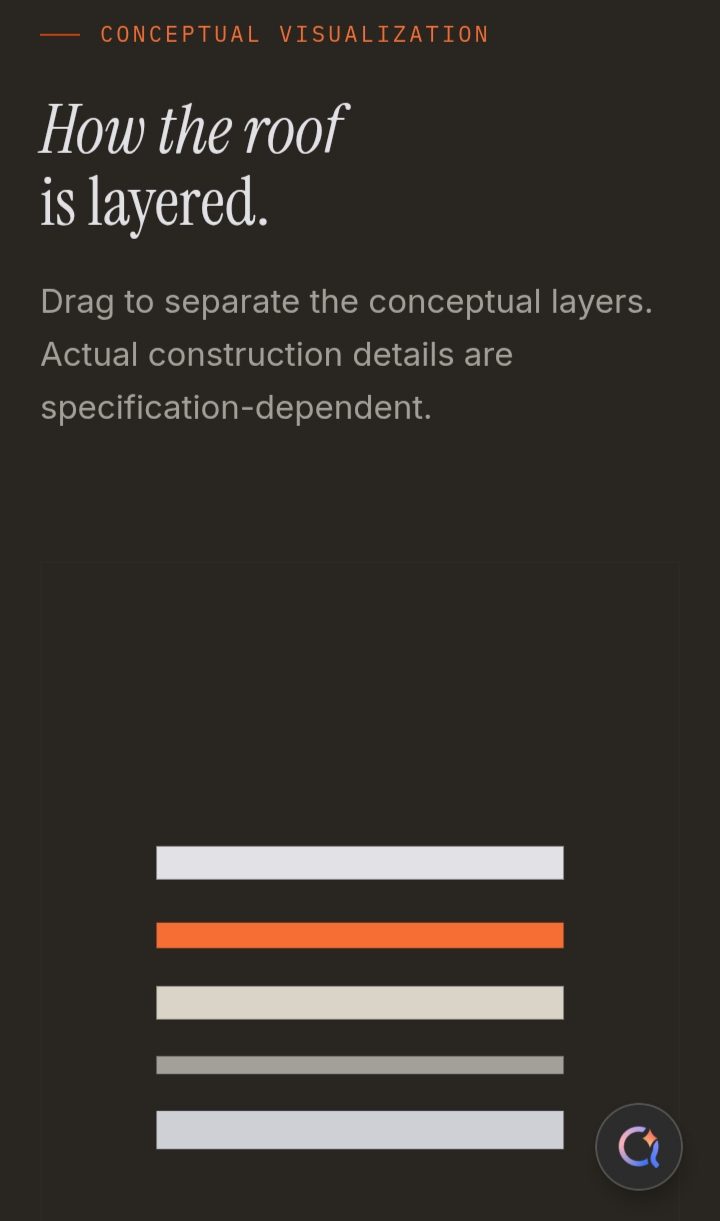
I paired a side-by-side comparison of a conventional panel array against an integrated Solis roof with an exploded roof-layer visualization (surface, photovoltaic element, structural layer, wiring), then backed both with a genuine solar output and ROI estimator so the architectural pitch is followed immediately by a concrete numbers-based one.
Design Direction
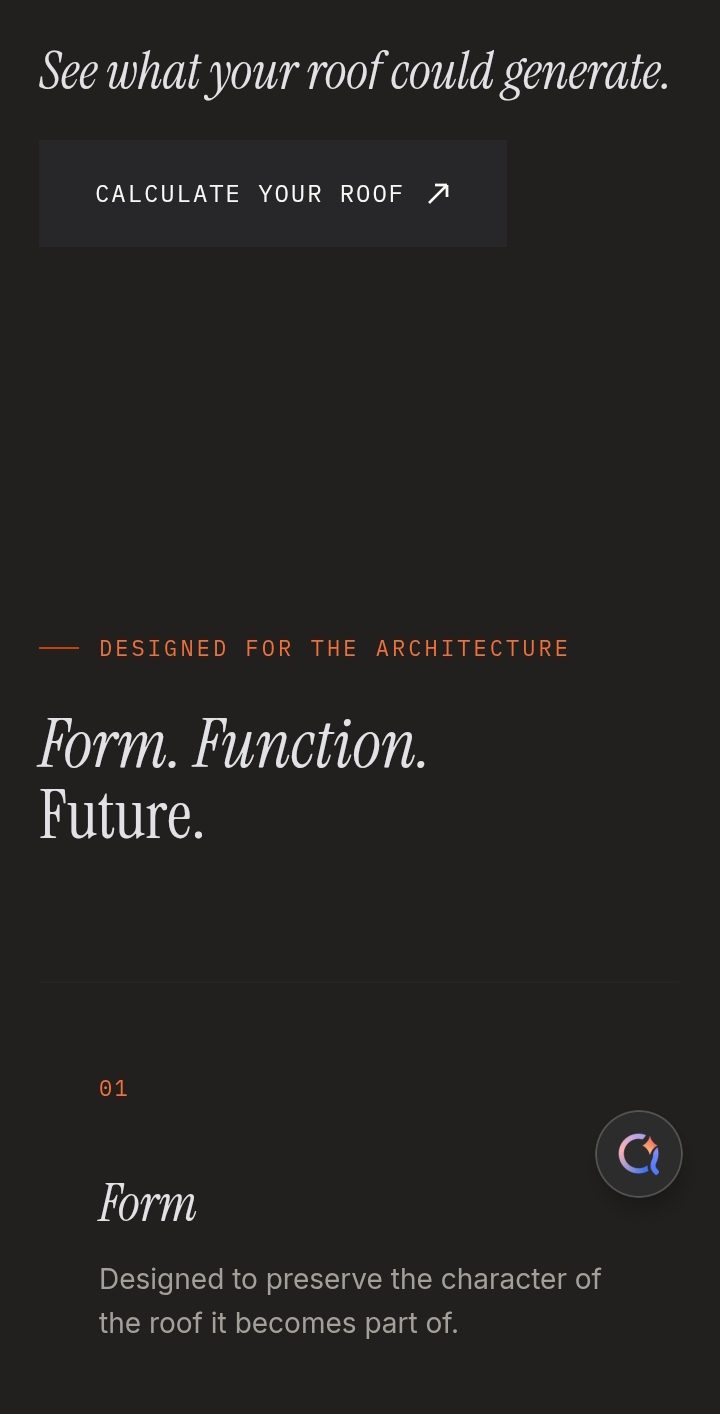
A warm, architectural palette (deep charcoal roofline against a dawn-toned sky gradient) and serif display type that reads more like a design studio than a solar sales site, reinforcing that this is positioned as architecture first.
Technical Implementation
Built with semantic HTML5, modular CSS and vanilla JavaScript. The ROI estimator uses a disclosed, simplified model (usable area × coverage × assumed efficiency × a configurable sun-hours factor) and is explicit that it isn't connected to a live solar-irradiation dataset.
Outcome
A solar-architecture concept that leads with genuine visual comparison and an exploded-layer diagram rather than abstract claims, backed by a transparently-modeled ROI estimator rather than a black-box number.
Lesson
Physical products sold through a screen need the screen to behave like a specification sheet first and a brochure second.